Call of Duty®: Mobile
- 4.3
- Rating
- 100.00M
- Installs
- Free
- Price

 Analysis by App-foxy
I spent time with Call of Duty®: Mobile as a fast, competitive action game, and my first impression was clear: this is not a small side experience built around a single mode. It brings together online player-versus-player shooting, Battle Royale, and ranked play in one mobile package. That range is its biggest attraction, but it also means the game asks more from you than simply downloading it and jumping into a quick match.
Developed by Activision Publishing, Inc., the game is free to install and aimed at mature players aged 17 and over. It has become one of the most visible mobile shooters, with over 100 million installs, an average rating of 4.3 from around 17 million ratings, and roughly 811 thousand written reviews. Those figures suggest a very large audience, although popularity alone does not guarantee that its controls, pace, or spending model will suit everyone.
What the mobile version feels like in everyday play
My favorite way to approach the game is to treat its modes as different moods rather than as one long progression path. A short multiplayer session works when I have only a few minutes and want immediate action. Battle Royale is a better choice when I want a longer match with more room for positioning and decision-making. Ranked play adds pressure because every mistake feels more meaningful than it does in a casual match.
You May Also Like

 AccuWeather: Weather Radar
AccuWeather Review: A Quick, Clear Forecast for Everyday Decisions
For everyday plans, the best forecast is the one you can understand quickly. AccuWeather makes rain timing, radar, and local conditions easy to act on, with a few trade-offs.

 Hill Climb Racing
Why Hill Climb Racing Still Turns Crashes Into One More Run
A tiny car, a bumpy hill and one more upgrade: Hill Climb Racing keeps resurfacing because its simple chaos makes every near-miss feel personal.

 AliExpress - Shopping App
AliExpress Makes Global Shopping Feel Personal, but Shoppers Bear the Risk
AliExpress turns a global marketplace into a pocket-sized discovery engine. Its reach is useful, its shopping loop compelling, and its trade-offs easy to miss.

 Lords Mobile: Kingdom Wars
Lords Mobile Is a Kingdom-Building Routine, Not a Quick Match
A case-by-case verdict on the building, battles, device demands, and social commitments that make Lords Mobile rewarding for some players and exhausting for others.

 PDF Scanner app - TapScanner
TapScanner Makes Paperwork Easier to Capture, Check, and Share
TapScanner makes scanning with a phone feel less like a rescue operation and more like a dependable step in getting work done. Its capture tools are useful, though not flawless.

 Block Blast!
 Shows How Much a Puzzle Game Can Leave Out
A quiet grid game shows why puzzle players increasingly value instant clarity, repeatable skill and low-pressure play—and where the genre still needs to catch up.
More From Our News Desk
View All News


That flexibility makes the game easier to return to than a mobile shooter focused on only one format. If I am tired of close-range firefights, I can switch to a slower, more tactical rhythm. If I do not want to commit to a longer match, I can stay with standard online multiplayer. The important trade-off is that the game can feel broad rather than perfectly focused. Players who prefer one polished competitive mode may find the variety distracting.
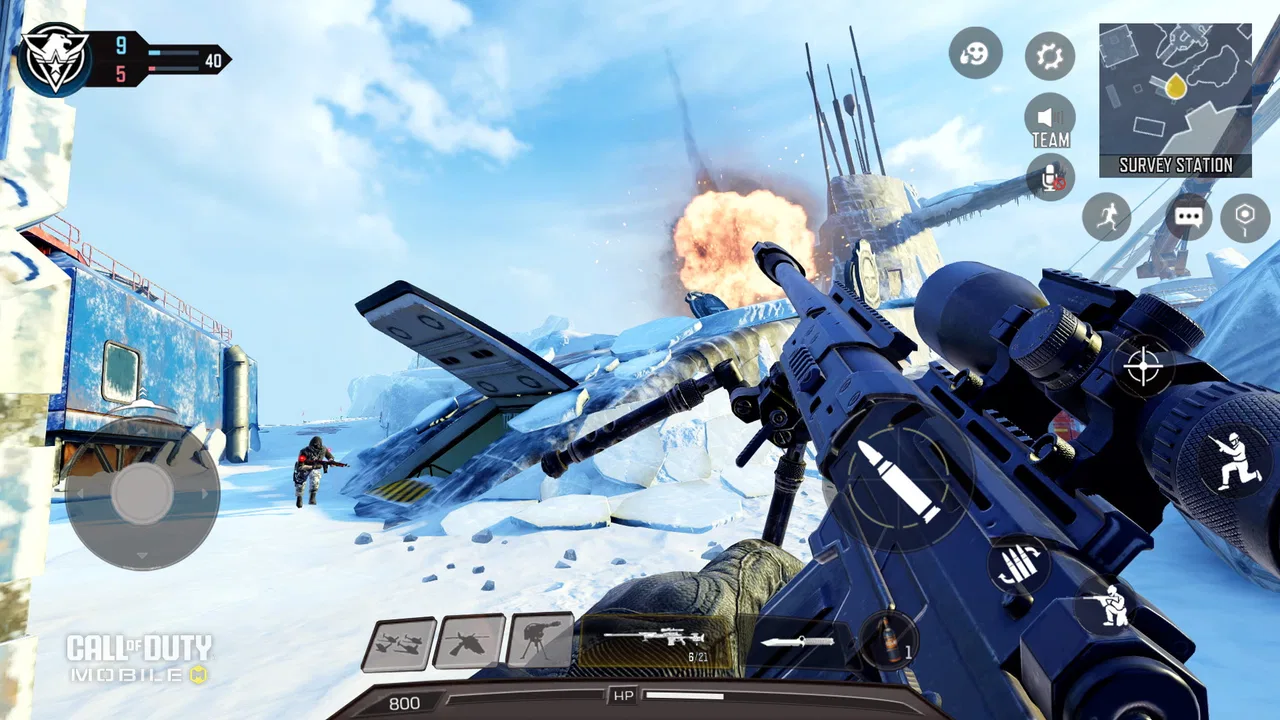
The shooting itself is designed around touch controls, so the first few sessions are partly about learning how to move, aim, fire, and react without the physical precision of a mouse or controller. I recommend spending time adjusting the layout before judging the game. A control arrangement that works for one player may feel awkward for another, especially when several actions compete for space on a small screen.
One practical tip is to make changes gradually. If I move every control at once, it becomes difficult to tell whether the problem is sensitivity, button placement, or simply unfamiliarity. I prefer to alter one part of the layout, play several matches, and then decide whether the change helped. That small routine saves frustration and is more useful than copying a setup blindly from another player.
Why the different modes matter
Online multiplayer is the easiest place to understand the game’s basic rhythm. Encounters are frequent, movement is important, and the short feedback loop makes it suitable for practicing aim and positioning. It is also the mode most likely to expose a player’s control problems, because hesitation is punished quickly. I found it useful as a training ground before taking ranked matches seriously.
Battle Royale changes the priorities. Instead of treating every moment as an immediate duel, I have to think about where to move, when to engage, and whether a fight is worth the risk. That makes it a stronger fit for players who enjoy planning and adapting. It is less suitable when I want guaranteed action every few seconds, because the tension often comes from waiting for the right opportunity.
Ranked play is where the game’s competitive identity becomes most obvious. It can be satisfying when a team communicates and each decision contributes to a win. It can also magnify weak teamwork, inconsistent connection quality, or a poor personal session. I would not use ranked matches as my first introduction. Learning the controls and understanding the flow of ordinary multiplayer first gives the experience a fairer chance.
A useful everyday scenario is a short evening session after work or school. I might begin with a casual match to check whether my attention is really there. If I am making careless mistakes, I stop before entering ranked play. If I feel focused, I can use that warm-up to settle into the controls. This approach reduces the common temptation to turn one frustrating loss into a long chain of increasingly tense matches.
Progress can motivate you, but it can also create pressure
The game’s long-term appeal comes from having reasons to keep returning beyond a single match. Progress gives ordinary sessions a sense of direction, while ranked play provides a more demanding target for people who enjoy competition. In my experience, that structure works best when I set a personal goal, such as improving movement or becoming more consistent with a particular style of play, instead of measuring every session only by wins.
That distinction matters because competitive mobile games can make progress feel urgent. A bad match may seem more important than it really is, especially when I am focused on a rank or trying to keep pace with other players. I get more enjoyment when I treat improvement as a series of small habits: checking the map before moving, avoiding unnecessary fights, and reviewing why I lost an encounter instead of blaming the result immediately.
Free access is a major reason to try it, but the game also includes optional purchases priced from $0.99 to $99.99 per item. That is a wide range, and it is worth deciding in advance whether I am comfortable spending at all. I prefer to view purchases as optional extras rather than as part of the basic cost of playing. Setting a personal limit before opening the store is more sensible than making decisions while chasing a reward or reacting to a disappointing match.
The spending question is especially relevant for younger users, although the game carries a Mature 17+ content rating and is not positioned as a children’s title. For an adult player, the practical issue is less about whether the game can be tried for free and more about whether optional purchases might change the way that player evaluates progress. If every session becomes a reason to buy something, the free entry point stops feeling like an advantage.
I also think the game is easier to enjoy when I separate performance from ownership. Having more items does not automatically make me a better player, and buying something after a loss will not repair poor positioning or weak teamwork. That mindset keeps the focus on the parts I can actually improve: awareness, timing, movement, and communication.
Is the competition fair?
Fairness is the question I would ask before recommending any online shooter. In this case, I can confidently describe the purchase options and the competitive pressure, but I would not claim more than that. The available facts establish that the game is free and contains in-app purchases, yet they do not provide enough detail to make a definitive statement about how every purchase interacts with every mode or competitive situation.
That uncertainty does not make the game impossible to enjoy, but it does affect how I would approach it. Players who want a strictly controlled competitive environment may prefer a game with a clearly documented, purchase-independent ruleset. Players who are comfortable treating purchases as optional and judging the experience match by match may find the arrangement acceptable, provided they keep their spending boundaries clear.
For me, competitive fairness also includes factors that have nothing to do with money. Touchscreen comfort, device handling, connection stability, and team coordination can all shape a match. A player may lose because of poor timing or a difficult control layout and incorrectly assume that spending is the main issue. Before drawing that conclusion, I would first test the controls, play several ordinary matches, and see whether my results improve through practice.
Another useful habit is to avoid entering ranked play while experimenting with unfamiliar settings. Configuration changes can make a player feel temporarily worse, even when the long-term result may be better. I prefer to test adjustments outside the most important matches, then keep the layout stable for a while. Consistency makes it easier to tell whether I am improving or simply adapting to another change.
The game is a stronger recommendation for someone who enjoys learning a competitive system than for someone who wants instant mastery. Its mobile format makes it accessible, but accessibility is not the same as simplicity. The difference between a casual player and a committed player can grow quickly because the committed player usually spends more time refining controls, movement, and decision-making.
What I would want to know before installing
The first question is whether a phone or tablet running Android 7.0 or later can handle the experience comfortably. The minimum operating-system requirement makes the game available to a broad range of devices, but an operating-system version alone does not tell me how smoothly a particular device will perform. I would leave room for the game itself and avoid judging it during a session when the device is already struggling with heat or background activity.
The second question is whether it is suitable for someone who only wants offline play. This is fundamentally an online multiplayer action game, so it makes the most sense for people who expect to connect with other players. If I wanted a self-contained shooter that works without an online competitive environment, I would look elsewhere rather than trying to force this game into the wrong use case.
Another common concern is whether a new player can enjoy it without spending. Because the game is free to install and purchases are optional in the stated pricing model, I can begin without paying. My honest advice is to play first, understand what keeps you returning, and only then decide whether any purchase is worth it. That order protects the free trial from becoming an impulse-buying exercise.
Players may also wonder whether Battle Royale or ranked play should come first. I would start with ordinary multiplayer to become comfortable with movement and aiming. Then I would try Battle Royale if I enjoy making slower decisions, and move into ranked only after I can accept losses without immediately changing everything about my setup. This sequence gives each mode a clearer purpose.
Finally, I would ask whether the game is right for a casual player. My answer is yes, with a qualification. Casual sessions are possible, but the game’s strongest appeal is competitive repetition. If I only want a relaxed experience with no pressure, the action, online opponents, and mature rating may not be ideal. A slower single-player game would probably be a better match for that mood.
Where it stands beside other mobile shooters
Compared with a focused arena shooter, this game offers more variety through its combination of standard multiplayer, Battle Royale, and ranked action. That makes it more adaptable, but it may also feel less streamlined to someone who wants one consistent competitive format. Compared with a dedicated Battle Royale title, it is appealing when I want a quick switch between short firefights and longer survival matches rather than committing to only one style.
Its strongest advantage over simpler alternatives is the sense that there is always another way to play. Its main weakness is that this breadth can increase the learning burden. I have more systems, decisions, and expectations to manage, and that can be tiring on a small screen. A simpler shooter may be better for someone who values immediate clarity over a large selection of modes.
The game also differs from offline action titles because the quality of a session depends partly on the presence of other players. That can create memorable teamwork and intense competition, but it can also make the experience less predictable. I would choose it for interaction and replayability, not for a calm, controlled pace.
My trust verdict after weighing free access and spending
I recommend Call of Duty®: Mobile to adults who want a substantial mobile action shooter and are willing to learn its touch controls. The free entry point makes trying it straightforward, while the combination of online multiplayer, Battle Royale, and ranked play gives it enough variety to support regular sessions. Its large audience reinforces that this is an established choice rather than a niche experiment.
My recommendation is more cautious for anyone who dislikes competitive pressure, online dependence, or optional purchases. The price range reaches from $0.99 to $99.99 per item, so I would not install it without first deciding how I want to handle spending. The safest approach is to enjoy the free portion, set a firm limit, and never treat a purchase as a solution to a losing streak.
I also would not present the game as automatically fair or unfair based only on the existence of purchases. The confirmed purchase information is not enough to make a complete judgment about every competitive interaction, so I would evaluate it personally through ordinary play and keep expectations realistic. That is the honest position: the game is worth trying, but competitive-minded players should pay attention to how the experience feels for them rather than relying on its popularity.
With version 1.0.57 and a release history that began on September 30, 2019, it remains a mature mobile shooter rather than a brand-new experiment. I would install it when I want energetic matches, a choice between several action formats, and a game I can revisit over time. I would skip it when I want offline calm, a completely purchase-free competitive environment, or a simple shooter that asks very little of me.
FAQs for Call of Duty®: Mobile
01What is Call of Duty®: Mobile?
Call of Duty®: Mobile is a free-to-play first-person shooter for Android and iOS that brings together familiar content from the Call of Duty series. It includes multiplayer matches, a battle royale mode, ranked competition, seasonal events, customizable loadouts, and unlockable weapons and operators. The game is designed primarily for online play and receives regular updates with new maps, modes, and rewards.
02Can Call of Duty®: Mobile be played offline?
No. Call of Duty®: Mobile requires an internet connection for most, if not all, of its gameplay features. Multiplayer, battle royale, account progress, seasonal content, and matchmaking depend on online services. A stable Wi-Fi or mobile-data connection is recommended, especially for longer matches, because interruptions can cause lag, disconnections, or loss of match progress. Data usage may also be significant when downloading updates.
03Is Call of Duty®: Mobile free to download and play?
Yes, the game can be downloaded and played for free, but it includes optional in-app purchases. Players can buy premium currency, battle passes, cosmetic items, bundles, and other digital content. These purchases are generally intended to provide customization and additional rewards rather than replace basic gameplay access. Parents should review device purchase settings, since the game may display frequent offers during seasonal events and progression.
04What device requirements and storage space does the game need?
Call of Duty®: Mobile requires a compatible Android or iOS device with enough available storage for the initial installation, downloaded maps, high-quality graphics, and future updates. The exact requirements can change as the game evolves, so checking the current listing in Google Play or the App Store is important. A newer device usually provides smoother frame rates, shorter loading times, and better performance during crowded matches.
05Is Call of Duty®: Mobile suitable for children?
Call of Duty®: Mobile contains realistic shooting, violence, competitive combat, online communication, and optional purchases, so it may not be suitable for younger children. Age ratings vary by country and platform, and parents should review the official rating before installation. It is also wise to use parental controls, monitor chat interactions, and restrict in-app purchases. Players should remember that online matches may include unpredictable behavior from other users.
Pros
- Excellent gunplay with responsive controls and customizable layouts.
- Large selection of multiplayer modes
- maps
- and seasonal events.
- Battle Royale mode offers varied classes
- vehicles
- and strategic options.
- Frequent updates add weapons
- operators
- challenges
- and limited-time content.
- Strong progression system rewards regular play with unlocks and cosmetics.
Cons
- Large downloads and frequent updates can consume considerable storage space.
- Touch controls may feel difficult until the layout and sensitivity are adjusted.
- Competitive matches can be affected by highly skilled or experienced players.
- Many cosmetic rewards and items are tied to random or paid systems.
- Battery drain and device heating may occur during longer gaming sessions.

Call of Duty®: Mobile
Gallery